
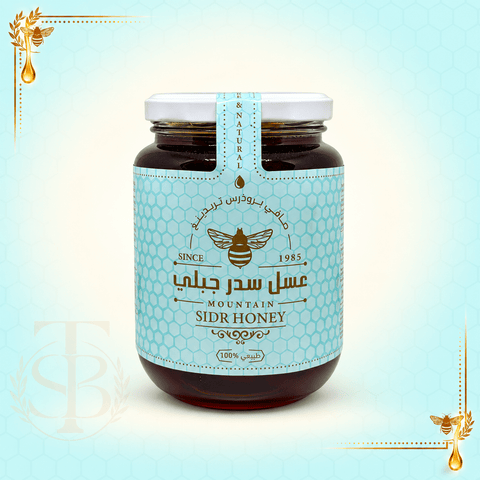
Short answer: Manuka and Sidr are two of the world's most prized single-flower honeys, from very different trees and regions. Manuka comes from the manuka bush in New Zealand and parts of Australia; it is usually thick, with an earthy, slightly bitter taste, and is sold with grading numbers such as UMF or MGO. Sidr comes from the Sidr (jujube) tree, famous in Yemen, Saudi Arabia, Pakistan and Kashmir; it is smooth and rich, with a caramel-like taste, and is a symbol of hospitality in the Gulf.
Where each honey comes from
Manuka honey is made by bees that visit the flowers of the manuka bush (Leptospermum scoparium), which grows mainly in New Zealand and in parts of Australia. The bush flowers for only a few weeks a year.
Sidr honey comes from the Sidr tree (Ziziphus spina-christi) and its close jujube relatives. It is best known from Yemen and Saudi Arabia, and from Pakistan and Kashmir, where the tree is called beri. Learn more in our Sidr honey guide.
Taste and texture
- Manuka: dense and often very thick, with earthy, herbal and slightly bitter notes.
- Sidr: smooth and rich, with warm caramel and butterscotch notes and a gentle finish.
How each one is graded
Manuka is sold with numbers on the label. UMF and MGO are grading systems that measure natural compounds found in manuka honey; the higher the number, the higher the price. Sidr has no single international grade. Buyers judge it by origin, harvest season, taste, aroma and – most of all – a seller they trust.
Manuka vs Sidr at a glance
| Feature | Manuka honey | Sidr honey |
|---|---|---|
| Source plant | Manuka bush | Sidr / jujube tree |
| Main origins | New Zealand, Australia | Yemen, Saudi Arabia, Pakistan, Kashmir |
| Taste | Earthy, herbal, slightly bitter | Rich, caramel-like, smooth |
| Texture | Thick, dense | Smooth and flowing |
| Grading | UMF / MGO numbers | Origin, harvest and seller |
| Best known for | A spoonful on its own, toast | Breakfast, guests, gifts, honeycomb |
Why both are expensive
Both honeys come from plants that flower for a short time in a limited area, so supply is small. Manuka adds the cost of laboratory grading; good Sidr depends on remote harvests and careful handling. In both cases, very cheap “premium” honey is a warning sign – see real vs fake honey.
How people enjoy them
In New Zealand, the UK and the USA, Manuka is often taken by the spoon or spread on toast. In the Gulf, Sidr honey is part of hospitality: on warm bread at breakfast, with dates and Arabic coffee for guests, and as a gift for family. See honey in a Qatari breakfast for ideas.
Which one should you choose?
It comes down to taste. If you like strong, earthy flavours, try Manuka. If you prefer a rich, smooth honey that pairs well with bread, dates and coffee, Sidr is the classic choice – and the one most loved in Qatar.
Honey is not suitable for infants under 12 months.
Taste real Sidr honey
Shop Sidr honey → · Sidr honeycomb → · Cash on delivery · Delivery across Qatar · 7-day money-back · WhatsApp +974 7772 5027
Frequently asked questions
Is Manuka a type of Sidr honey?
No. They come from different plants in different parts of the world: Manuka from the manuka bush in New Zealand and Australia, Sidr from the Sidr (jujube) tree in Arabia and South Asia.
What do UMF and MGO mean on Manuka labels?
They are grading systems that measure natural compounds found in manuka honey. A higher number means a higher grade and usually a higher price.
Where does your Sidr honey come from?
Our honey comes from Kashmir, Pakistan, and is brought to Qatar by Safi Brothers Trading, a family honey business since 1985.
Safi Brothers Trading is a Qatar company (CR No. 203876) from a family that has been in the honey business since 1985. Our honey comes from Kashmir, Pakistan. Shop online or visit us at Ezdan Oasis, Al Wukair.

